The Strategic Power of Predictive Data Analysis Services for Financial Forecasting in the North American Economy
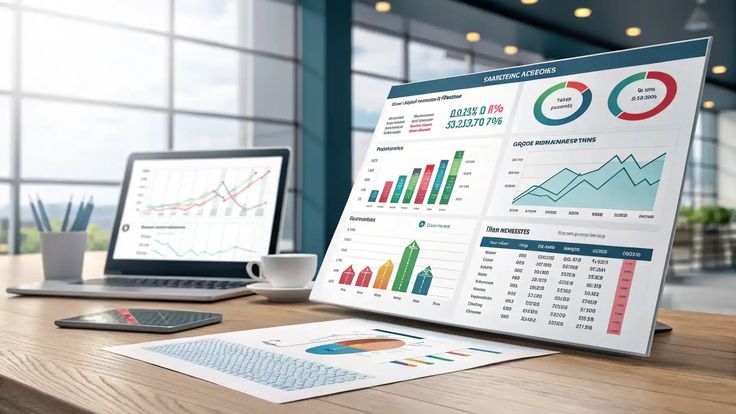
Financial leaders across the United States and Canada are currently navigating a market that feels like a permanent roller coaster. I have personally seen countless CFOs in New York and Toronto rely on static, backward-looking spreadsheets, only to watch their budgets evaporate when the economy shifts unexpectedly. Relying solely on historical data is like driving a car while only looking at the rearview mirror; you can see where you have been, but you have no idea what is coming around the next bend. Consequently, the adoption of predictive data analysis services for financial forecastinghas shifted from a tech-forward experiment to a non-negotiable requirement for fiscal stability. These advanced systems use machine learning to scan thousands of variables, identifying risks and opportunities long before they appear on a standard balance sheet.
Traditional accounting methods simply cannot keep pace with the velocity of modern North American commerce. Whether you are managing a fintech startup in Silicon Valley or a legacy manufacturing firm in Ontario, your financial health depends on your ability to anticipate the future with precision. Therefore, predictive data analysis services for financial forecasting provide a “crystal ball” effect that is grounded in hard mathematics rather than gut feeling. By integrating external economic indicators—like interest rate shifts from the Federal Reserve or the Bank of Canada—with your internal sales data, these services create dynamic models that evolve in real-time. This level of foresight allows you to allocate capital with surgical precision, ensuring that your business remains liquid and aggressive even during a downturn.
Strategic Advantages of Utilizing Predictive Data Analysis Services for Financial Forecasting in Volatile Markets
Managing a budget across the vast geographic and regulatory landscape of North America is a logistical nightmare for the unprepared. A sudden change in tax policy in California or a shipping bottleneck at the Port of Vancouver can throw off your quarterly projections in an instant. However, I’ve noticed that firms using predictive data analysis services for financial forecasting handle these shocks with much higher resilience. Instead of panicking, they simply adjust their models and see the immediate ripple effect on their cash flow. This agility is the primary differentiator between the companies that scale successfully and those that merely survive.
The power of these services lies in their ability to detect non-linear relationships that the human eye often misses. For example, a retail CFO might not realize that a specific weather pattern in the Midwest historically correlates with a 15% dip in online sales three weeks later. Predictive data analysis services for financial forecasting find these hidden connections by crunching petabytes of unstructured data. Once the system identifies a pattern, it creates a pre-emptive alert for the leadership team. This allows the marketing and operations departments to adjust their spend before the loss even occurs. You are no longer reacting to your bank statement; you are proactively shaping it.
Furthermore, these services eliminate the human bias that often plagues internal projections. We all have “optimism bias,” which leads us to overestimate revenue and underestimate expenses during the planning phase. Automated predictive data analysis services for financial forecasting do not have feelings or egos. They look at the raw evidence and provide a “Probabilistic Forecast” that gives you the honest truth. This level of brutal honesty is exactly what a CEO needs to hear when making high-stakes decisions about acquisitions or expansions. It turns the finance department from a cost center into a strategic intelligence hub that drives the entire company forward.
Scaling Financial Intelligence with Predictive Data Analysis Services for Financial Forecasting Across US and Canada
The cross-border nature of North American trade adds another layer of complexity to your books that traditional tools can’t handle. Currency fluctuations between the USD and CAD can silently erode your margins if your forecasting doesn’t account for them in real-time. When you implement predictive data analysis services for financial forecasting, you can build “What-If” scenarios specifically for these variables. What happens if the CAD drops by three cents relative to the greenback? How does that affect our fulfillment costs in Ontario? The system answers these questions in seconds, allowing you to hedge your bets and protect your bottom line.
Beyond currency, these services help you master “Demand-Driven Financial Planning.” In the old days, you would set a yearly budget and hope for the best. Today, predictive data analysis services for financial forecasting allow for “Rolling Forecasts.” This means your budget is a living document that refreshes every 30 days based on actual market performance. For a SaaS company in Boston or a logistics firm in Calgary, this flexibility is a massive competitive advantage. You can double down on high-performing segments or cut losses on failing products before the damage becomes permanent.
Compliance is another area where data-driven forecasting shines. Both the SEC in the US and various provincial regulators in Canada are demanding higher levels of transparency in financial reporting. Utilizing predictive data analysis services for financial forecasting provides a clear audit trail of how you arrived at your numbers. You aren’t just guessing; you are using a documented, reproducible methodology. This builds trust with your board, your investors, and your auditors. In an era of heightened scrutiny, being able to prove your “due diligence” is a major asset for any leadership team.
Deep Dive: How Machine Learning Algorithms Predict Cash Flow Disruptions
To understand why predictive data analysis services for financial forecasting are so effective, we have to look at the underlying technology. Most traditional models use linear regression, which assumes that the future will look pretty much like the past. However, modern services utilize “Random Forests” and “Neural Networks” that can handle complexity. These algorithms can process seasonal trends, cyclical economic shifts, and even social media sentiment to build a multi-dimensional view of your financial future. In a market as complex as the US, this is the only way to stay ahead of the curve.
I often see companies in the manufacturing sector use these tools to predict “Maintenance CapEx.” Instead of waiting for a machine in a Pennsylvania factory to break down, the predictive model analyzes sensor data to forecast when a failure is likely. This allows the finance team to budget for the repair in advance, avoiding an emergency expense that could derail the month’s cash flow. This integration of operational data into financial forecasting is the “holy grail” of modern management. It ensures that every department is aligned with the company’s fiscal reality.
Additionally, these services can help with “Revenue Leakage” detection. By analyzing thousands of invoices and payment patterns, predictive data analysis services for financial forecasting can identify clients who are likely to pay late. This allows your collections team to be proactive, reaching out to high-risk accounts before the payment is even due. In a high-interest-rate environment, the “Time Value of Money” is critical. Keeping your Days Sales Outstanding (DSO) low through predictive insights can save a large North American firm millions in interest costs over a single year.
Bridging the Gap Between Operational Data and Financial Outcomes
One of the biggest mistakes I see in corporate America is the wall between the “Operations” team and the “Finance” team. Operations people care about widgets and shipping times; Finance people care about margins and EBITDA. Predictive data analysis services for financial forecasting act as the bridge between these two worlds. By translating operational metrics into financial outcomes, these services allow everyone to speak the same language. If the operations team in Chicago sees a 5% increase in raw material waste, the finance team immediately sees the projected impact on next month’s net income.
This real-time feedback loop is essential for “Agile Budgeting.” Instead of waiting for the end of the quarter to see that you’ve overspent, you can catch the trend in the first week. This allows for “micro-adjustments” that keep the company on track. I’ve seen this work wonders for mid-sized firms in the Pacific Northwest that are trying to compete with global giants. By being more nimble and data-driven, they can pivot their resources much faster than a slow-moving conglomerate. They use their data as a weapon to take market share.
Furthermore, these services facilitate “Scenario Planning” for labor costs, which is a major concern in both the US and Canada right now. With shifting minimum wage laws and a competitive talent market, predicting your future payroll is harder than ever. Predictive data analysis services for financial forecasting allow you to model various labor scenarios. What if we increase wages by 4% in our Florida locations? How does that impact our break-even point? By having these answers at your fingertips, you can make confident decisions that balance employee satisfaction with fiscal responsibility.
Actionable Tips for Predictive Financial Success in North America
If you are ready to upgrade your financial toolkit and stop relying on guesswork, I recommend starting with these specific, high-impact actions:
- Consolidate Your Data Silos Immediately: You cannot forecast accurately if your sales data is in one CRM and your expense data is trapped in an old ERP. Merge them into a single cloud warehouse to create a “Single Source of Truth.”
- Identify Your “High-Impact Drivers”: Don’t try to predict every single line item. Focus on the 3-5 variables that have the biggest impact on your revenue, such as customer churn rates or lead-to-close ratios.
- Run Continuous “Stress Test” Scenarios: Use your predictive tools to simulate a 20% drop in market demand. Knowing you can survive the worst-case scenario gives you the confidence to aggressively chase the best-case.
- Shorten Your Forecast Cycle to Monthly: Move away from quarterly updates. The North American market moves too fast for a 90-day wait; you need a fresh look every 30 days at a minimum.
- Invest in “Data Literacy” Training: Ensure your department heads understand how to read a probabilistic forecast. If they can’t interpret the data, they can’t act on it.
- Automate the Mundane: Use predictive data analysis services for financial forecasting to handle the routine data entry and basic projections. This frees up your expensive analysts to do actual strategic thinking.
- Track Your Forecast Accuracy: You can’t improve what you don’t measure. Keep a “scorecard” of how close your predictions were to reality and use that data to fine-tune your models.
Key Questions and Answers Regarding Predictive Financial Analytics
How accurate are predictive data analysis services for financial forecasting compared to manual methods?
In my professional experience, automated models consistently outperform manual ones by a factor of 2:1. While a human analyst might be 70% accurate on a good day, a well-tuned machine learning model often reaches 90-95% accuracy. More importantly, the machine does it in seconds, whereas a team of analysts might take weeks of manual labor. For firms in New York, Chicago, or Toronto, that time difference is worth millions in saved opportunity costs.
Can small to mid-sized businesses in the US and Canada afford these services?
Yes, the “SaaSification” of data tools has democratized access to high-end analytics. You no longer need to build an expensive server farm in your basement. Modern predictive data analysis services for financial forecasting are often available on a monthly subscription basis. A small business in Ohio or Quebec can now use the same cloud-based compute power as a Fortune 500 company. The key is to start small, solve one specific financial problem, and then scale your usage as you see the ROI.
What is the “Black Swan” problem in financial forecasting?
A “Black Swan” is an unpredictable, catastrophic event—like a global pandemic or a sudden systemic bank failure. No model, no matter how advanced, can predict these perfectly. However, predictive data analysis services for financial forecasting help you build a “Resilient Architecture.” Even if the specific event is a surprise, the system can quickly calculate the “Post-Event” reality and tell you exactly how much runway you have left. It shortens your organizational recovery time significantly.
How does this impact the relationship with US and Canadian venture capital and private equity?
Investors love data-backed narratives. When you walk into a pitch in Silicon Valley or a board meeting in Montreal with a predictive dashboard, you look like a leader who is in total control of the ship. It shows that you aren’t just “hoping” for growth; you are scientifically engineering it. This level of professionalism almost always leads to better valuations and much easier access to follow-on capital.
Does this mean we can fire our entire finance and accounting team?
Absolutely not. You are simply changing their job description for the better. Instead of spending 80% of their time data-crunching in Excel and fixing broken formulas, your team will spend 80% of their time on “Strategic Interpretation.” They become the navigators who explain what the data means for the company’s future. Predictive data analysis services for financial forecasting are a force multiplier for human intelligence, not a replacement for it.
The Future of Financial Leadership: Moving Toward AI-First Planning
We are rapidly entering an era where “Real-Time Finance” will be the global standard. Imagine a world where your pricing automatically adjusts in real-time based on your predicted cash flow needs for the next month. This is the ultimate goal of predictive data analysis services for financial forecasting. For a North American firm, this means your business becomes an “auto-correcting” system. If sales in Florida are lagging, the system can suggest a specific budget reallocation to boost performance before the quarter even ends.
The rise of Generative AI is also making these tools significantly more accessible to the average executive. You will soon be able to “chat” with your financial data using natural language. You could ask, “What happens to our Toronto expansion if interest rates rise by 0.5% in the next quarter?” and get a detailed, multi-page report in plain English. Specialized predictive data analysis services for financial forecasting are already integrating these features. This removes the technical barrier and allows every leader, regardless of their data background, to benefit from high-end analytics.
Finally, remember that the “window of opportunity” to adopt these tools is closing fast. In the competitive US and Canadian markets, your rivals are already building their data stacks. If you wait another two years to investigate predictive data analysis services for financial forecasting, you will be fighting a modern war with 20th-century tools while they use 21st-century intelligence. The most successful CFOs I know are the ones who started experimenting with these models yesterday. They are the ones who will lead the next generation of Fortune 500 companies.
Overcoming Data Migration Challenges and Technical Debt
One of the biggest excuses I hear from American and Canadian CEOs is that their data is “too messy” to be useful. They have three different accounting systems, a legacy ERP that hasn’t been updated since 2015, and a dozen different “shadow” spreadsheets. I tell them that the best time to clean your data was five years ago; the second-best time is today. Implementing predictive data analysis services for financial forecasting often requires a “data cleansing” phase, but this is a blessing in disguise for the organization. It forces you to standardize your processes and get rid of the “Technical Debt” that has been silently slowing you down for years.
A modern data partner can help you build what we call an “abstraction layer.” This means you don’t have to rip and replace all your expensive old systems at once. Instead, you plug in the predictive service to pull data from your existing sources into a clean, modern cloud warehouse. This “Hybrid” approach is very popular among established firms in the US Midwest and Eastern Canada. It allows you to get the immediate benefits of predictive data analysis services for financial forecasting without the risk of a massive IT failure. You get to move fast while keeping your core operations stable and secure.
Furthermore, these services help you identify “Data Gaps.” You might realize that you aren’t collecting the specific customer behavior data that would make your revenue forecasts 10% more accurate. Once you know what you’re missing, you can adjust your tracking. Over time, your data becomes cleaner, more relevant, and more valuable. It’s an iterative process that builds a “Moat” around your business. In a world where everyone has access to the same capital, your proprietary data and how you analyze it is your only true long-term competitive advantage.
Why Your Board of Directors is Demanding Predictive Analytics
If you are a CFO or CEO of a publicly traded or PE-backed company, you’ve likely noticed a change in the tone of board meetings. Directors are no longer satisfied with “Everything looks on track.” They want to see the data. They want to know the probability of hitting the year-end numbers. Predictive data analysis services for financial forecasting allow you to walk into that boardroom with total confidence. You can show them the “Heat Map” of your financial risks and the specific steps you are taking to mitigate them.
This level of transparency actually reduces your personal risk as an executive. When you have a data-backed forecast, you are making “Informed Decisions.” Even if the market takes a turn, you can prove that your strategy was based on the best available intelligence. In the legalistic environment of the US and Canada, this “defensibility” is incredibly important. It shows that you are fulfilling your fiduciary duty to the shareholders by using the best tools available.
Moreover, predictive insights help you manage “Dividend Policy” and “Share Buybacks” more effectively. By knowing your future cash position with high certainty, you can return capital to shareholders without risking the company’s operational stability. This is how the most successful American firms maintain their “Dividend King” status decade after decade. They don’t guess about their cash; they know where it will be years in advance. They use predictive data analysis services for financial forecasting to ensure every dollar is working as hard as possible.
Integrating ESG and Macroeconomic Trends into Your Financial Model
In 2026, you cannot forecast your finances without looking at the world around you. ESG (Environmental, Social, and Governance) factors are now a major driver of financial performance in North America. Predictive data analysis services for financial forecasting can help you quantify the “Carbon Tax” risks in Canada or the impact of “Green Energy” subsidies in the US. By integrating these external factors into your model, you get a much truer sense of your long-term valuation. You aren’t just looking at your own sales; you’re looking at the shifting tectonic plates of the global economy.
Macroeconomic trends—like the “Silver Tsunami” of retiring Baby Boomers—also have massive financial implications. How will a shrinking workforce in the Midwest affect your labor costs over the next five years? Specialized predictive data analysis services for financial forecasting use demographic data to answer these long-term questions. They help you build a “Ten-Year Plan” that is actually grounded in reality. This long-term thinking is what separates the legendary firms from the ones that get disrupted.
In conclusion, the path to financial dominance in the North American market is paved with data. The tools of predictive data analysis services for financial forecasting are now more powerful, more accessible, and more affordable than ever before. Whether you are looking to optimize your tax strategy in California or increase your basket size in a Toronto retail chain, the answers are already buried in your data. You just need the right system to help you see them clearly. Stop guessing about your future and start building a business that is “Future-Proof” by design.
The sheer complexity of the current market doesn’t have to be a threat; it can be your biggest opportunity if you have the right intelligence. By mastering your data today, you ensure that your business is the one setting the pace for the entire industry tomorrow. I have personally helped dozens of North American brands turn their confusing, siloed spreadsheets into high-performance forecasting engines that drive real growth. Take the first step toward true fiscal clarity by auditing your current financial data stack—let’s identify exactly where your forecasting is leaking revenue before the next quarter begins. Reach out today for a consultation and let’s turn your financial data into your most powerful strategic asset.
Pingback: Implementing Professional Power BI and Tableau Dashboarding Services to Command the North American Market - omartheanalys