Business Data Analysis and Reporting Services
Businesses generate data continuously through sales, marketing, finance, and operations. Business data analysis and reporting services help transform this data into structured insights that decision-makers can understand and use. Instead of relying on intuition, companies rely on reports, dashboards, and clear metrics to guide actions.
In many organizations, data already exists but remains scattered across systems. Therefore, analysis and reporting services focus on organizing this data, connecting it, and presenting it in a meaningful way. As a result, managers gain visibility into performance and trends.
How Business Data Analysis and Reporting Services Support Decision-Making
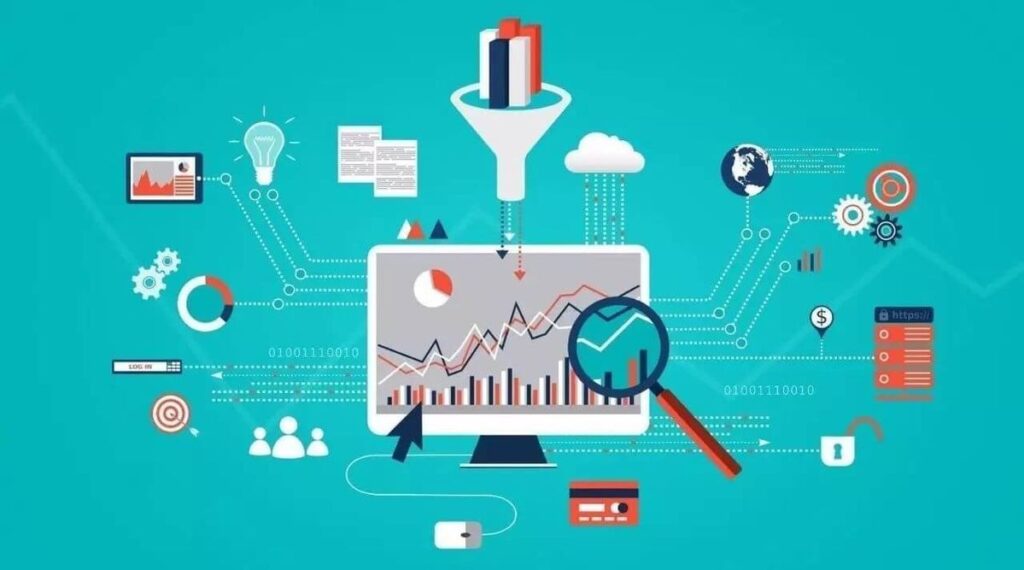
Business data analysis and reporting services focus on converting raw data into information that supports daily and strategic decisions. First, data is collected from different sources. Then, it is cleaned and standardized to ensure consistency. After that, analysts apply methods to identify patterns, relationships, and performance gaps.
Because reports present information visually, stakeholders can quickly understand results. Moreover, regular reporting allows teams to monitor progress and react faster to changes.
Types of Reports Used in Business Analysis
Different business goals require different types of reports. Operational reports focus on daily activities, while management reports summarize performance over longer periods. Meanwhile, analytical reports explore deeper trends and relationships.
Each report type plays a specific role. Together, they provide a complete picture of business performance.
Performance and KPI Reports
Performance reports track key performance indicators such as revenue, conversion rates, and operational efficiency. These reports help businesses measure success against targets.
Because KPIs are monitored regularly, teams can identify issues early. Consequently, corrective actions become more effective.
Financial Reporting and Analysis
Financial reports analyze costs, margins, and profitability. Instead of only reviewing accounting statements, businesses use analytical reports to understand financial drivers.
As a result, budgeting and forecasting become more accurate. Financial clarity supports sustainable growth.
Sales and Marketing Reports
Sales and marketing reports evaluate customer acquisition, campaign performance, and revenue contribution. These reports connect marketing activities with actual business results.
Therefore, companies can allocate budgets more efficiently. High-performing channels receive more focus, while underperforming ones are optimized.
Data Visualization in Reporting Services
Visualization plays a central role in business data analysis and reporting services. Charts, graphs, and dashboards simplify complex information.
When data is visualized, insights become easier to interpret. Additionally, visual reports improve communication between technical and non-technical teams.
Tools Commonly Used for Analysis and Reporting
Most reporting services rely on a mix of tools depending on complexity. Spreadsheets remain popular for flexibility. At the same time, business intelligence platforms support advanced dashboards.
SQL databases store structured data, while Python supports automation and deeper analysis. Together, these tools ensure reliable and scalable reporting.
Integrating Data from Multiple Departments
Business data often comes from different departments. Sales systems, marketing platforms, and finance tools store data separately.
Business data analysis and reporting services integrate these sources. Consequently, organizations gain a unified view of performance instead of isolated reports.
Improving Data Quality and Consistency
Poor data quality reduces trust in reports. Therefore, data cleaning and validation form a core part of reporting services.
By standardizing formats and removing errors, reports become more accurate. Over time, confidence in data-driven decisions increases.
Automation and Scheduled Reporting
Automation improves efficiency in reporting workflows. Instead of manually creating reports, businesses schedule automated updates.
As a result, stakeholders receive timely insights without delays. Automation also reduces human error.
Custom Reporting for Business Needs
Standard reports do not always answer specific business questions. Custom reporting focuses on metrics that matter most to the organization.
Business data analysis and reporting services design reports around goals, industry context, and decision requirements.
Scalability of Reporting Services
As companies grow, reporting needs evolve. Initially, basic reports may be sufficient. Later, advanced analytics and forecasting become necessary.
Scalable reporting services adapt to this growth. Therefore, businesses avoid constant system changes.
Supporting Strategic Planning
Because reports provide evidence, strategies become more realistic and achievable.
Enhancing Team Alignment
Shared reports align teams around the same metrics. When everyone sees the same data, collaboration improves.
Clear reporting reduces misunderstandings and supports accountability.
User Questions (Q&A) About Business Data Analysis and Reporting Services
What are business data analysis and reporting services?
They are services that analyze business data and present it through structured reports and dashboards to support decision-making.
Why are reporting services important for businesses?
They provide clarity, track performance, and help businesses respond quickly to changes.
Do small businesses need reporting services?
Yes, even small businesses benefit from structured reporting and insights.
What tools are used in reporting services?
Common tools include Excel, SQL, Python, Power BI, and Tableau.
How often should reports be updated?
Update frequency depends on business needs, but regular updates improve responsiveness.
Can reports be customized?
Yes, customization ensures reports align with business goals.
Is technical expertise required to read reports?
No, reports are designed to be user-friendly.
Can reporting services integrate multiple data sources?
Yes, integration is a key feature of these services.
How long does it take to set up reporting services?
Setup time varies but initial reports can be created quickly.
Do reporting services improve decision-making?
Yes, data-backed insights lead to better decisions.
Long-Term Impact of Business Data Analysis and Reporting Services
Through consistent reporting, businesses strengthen planning, improve performance, and gain a competitive advantage.
Pingback: Data Analysis Services for Decision Making - omartheanalys